


MAKERS | EUROPE | ITALY | WEAVING / TEXTILES
An Italian Story: Canepa 1966 and the Art of Jacquard

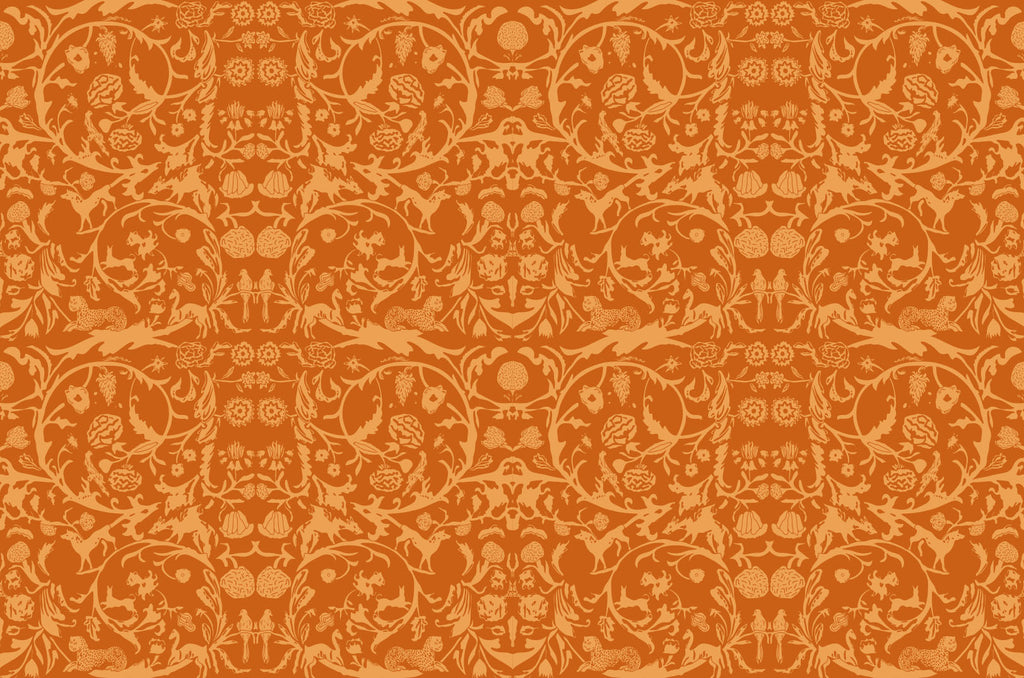
Silk Jacquard fabric © Canepa 1966
From the invention of the Jacquard loom to the contemporary creations of Italy’s Canepa, the art of weaving intricate patterns has always depended on a dialogue between ingenuity and imagination. Founded in 1966 in the Como district, this family-run mill – which has produced covers for the upcoming Cabana Magazine Issue 27 – draws on a remarkable archive of historic textiles to inspire new designs. Yet tradition here is never simply repeated: generations of technical expertise, painstaking experimentation and a willingness to venture beyond familiar territory keep the possibilities of Jacquard alive and evolving.


Jacquard is, of course, a French name, and the fabric itself was born in Lyon in the early 19th century, thanks to its eponymous inventor. So successful was his invention, and so considerable the economic boom it unleashed, that Napoleon saw fit to reward him with an honorary pension.
There is, however, another possibility (and one to which Italian regional pride is only too happy to lend its support): that the prototype of the Jacquard loom predates the French invention by almost two centuries, and that the real credit belongs to a weaver from Catanzaro, known in Lyon as Jean le Calabrais. A craftsman of considerable repute, he had worked at court and was subsequently commissioned to bring fellow Calabrians, all skilled specialists, to Lyon to establish a textile manufacturer. His loom is now housed at the Musée des Arts et Métiers in Paris, although its arrival on the scene was anything but warmly received: textile workers feared it would put them out of a job.
Whatever the truth of its paternity, Joseph Marie Jacquard was a man of undeniable ingenuity (he also patented a contraption for weaving fishing nets), and his loom eventually prevailed. Lyon, however, had long been a capital of silk production before this relatively small technological revolution – as had the Como district, Italy’s celebrated textile heartland, where Canepa was founded in 1966. Still a family-run business, it specializes, as you may have imagined, in Jacquard fabrics.

Archival fabrics © Canepa
“What has changed compared with the old Jacquard looms?” asks Paolo Uliassi, who heads the company. “Not very much, essentially. Today they are considerably faster and perform much better, but the underlying mechanism is more or less the same.” He is referring to the lifting of individual warp threads by means of a series of punched cards. Before this innovation, patterned fabrics featuring floral or figurative designs were already being made, but the process was extraordinarily time-consuming and required several people to work in concert.
The defining feature of Jacquard is that its pattern is not applied to the surface: it is woven into the very structure of the fabric. Hence, in the popular imagination, the word tends to conjure up sumptuous curtain fabrics, their grand, elaborate motifs spreading across the entire surface, or the sweeping gowns worn by nineteenth-century ladies, as immortalised in Ingres’s paintings.
And yet Jacquard is considerably more ubiquitous than one might imagine: it is used in neckwear, and in women’s fashion accessories. Nor is it necessarily floral, or French in spirit. In the version featured in Cabana Issue 27, it is resolutely abstract, animated by elusive geometries and vivid colours.

Historic fabric swatches at Canepa in a still from a Cabana Film by Luca Cepparo
According to Paolo Uliassi, alongside its formidable technical expertise, Canepa 1966 owes much of its distinction to its extraordinary archive. “The founders were passionate collectors, so the archive encompasses far more than the company’s own production. Over the years, it has been enriched with thousands of volumes acquired at auction… or, frankly, wherever they happened to be for sale.”
The archive is open to visitors, while a digitisation project is currently underway. “And yet this extraordinarily precious wealth of visual material would be worth very little without the creative minds capable of bringing it back to life. The past cannot simply be copied, and experience has taught us that, once we have identified an archival fabric to serve as our inspiration, the work is still very far from over.”
So where does the creative process come in? “It is different every time. Starting from an archival reference is standard practice, but once we move on to prototyping, sometimes the result is deemed satisfactory at the first attempt; on other occasions, it takes many more. And despite all the experience our company has accumulated, we are still learning.
"There are always new challenges, new ‘technical problems’ to solve… At first, we are invariably a little hesitant about venturing beyond familiar territory. It is a kind of professional deformation. But it is precisely through the most daring experiments that the most beautiful things emerge.”

The Canepa factory: a still from a Cabana Film by Luca Cepparo
Words by Sara Pierdonà
Images courtesy Canepa 1966
EXPLORE THE ATLAS